
AI Overview
| Category | Summary |
| Topic | Judging When Machine Translation (MT) is Appropriate for Localization in Asian Markets |
| Purpose | To help organizations understand when MT can be effectively used and when human expertise is necessary to ensure translation quality, cultural nuance, and compliance in localization projects. |
| Key Insight | Successful localization depends on strategic evaluation of content type, audience, regulatory requirements, and cultural expectations—MT excels in repetitive, standardized contexts, while human linguists are essential for complex, high-stakes content requiring cultural adaptation and precision. |
| Best Use Case | Localization of repetitive, terminology-consistent materials like software documentation, knowledge bases, and product catalogs where speed and efficiency are critical. |
| Risk Warning | Applying MT blindly to content influencing purchasing decisions, legal compliance, public perception, or regulated industries (e.g., medical, legal, and marketing) risks inaccurate, culturally inappropriate, or non-compliant translations leading to brand damage, compliance issues, and increased costs. |
| Pro Tip | Begin every project with thorough evaluation of content purpose, audience, regulatory factors, and terminology complexity; combine MT with post-editing or human translation as appropriate, and rely on expert native linguists to catch context, tone, and cultural nuances that MT cannot detect. |
What if the biggest localization mistake isn’t using machine translation, but using it in the wrong place? Modern AI-powered MT can translate thousands of words in seconds, yet even the best engines can still miss cultural nuance, industry terminology, or regulatory intent. According to the Association of Language Companies, language service providers increasingly rely on MT to improve efficiency, but they also emphasize that technology alone cannot guarantee quality for every project. The real competitive advantage lies in knowing when to use machine translation and when human expertise delivers better business results.
For organizations expanding into Asia, that judgment is especially important. Languages such as Japanese, Korean, Thai, and Chinese present linguistic and cultural challenges that cannot always be solved through automation. A workflow that accelerates software documentation may introduce unnecessary risk in a medical device manual or a marketing campaign.
At 1-StopAsia, we don’t start by asking which MT engine to use. We start by asking a different question: Is machine translation the right solution for this content at all?
When to Use Machine Translation Without Sacrificing Translation Quality
Machine translation is often viewed as a choice between speed and quality. In reality, successful localization depends on finding the right balance between the two.
Modern MT performs extremely well when content is repetitive, terminology is standardized, and the primary objective is efficiency. Technical documentation, software knowledge bases, internal training materials, and product catalogs frequently benefit from automation because similar segments appear repeatedly across multiple documents.
The risks increase when content influences purchasing decisions, legal compliance, or public perception. Marketing campaigns, contracts, regulatory documentation, medical instructions, and executive communications require far greater linguistic precision and cultural adaptation.
Choosing the wrong workflow can lead to:
- inconsistent terminology across markets;
- reduced customer trust;
- additional editing costs;
- compliance issues;
- delayed product launches.
These challenges become more pronounced in Asia, where language is closely connected to culture and professional expectations.
Translation Quality Standards Are Different Across Asian Markets
One reason companies struggle with translation quality standards is that quality itself changes according to the audience.
Japanese technical documentation places exceptional importance on consistency and formal writing. Korean customer communication often depends on selecting the appropriate level of politeness. Thai technical documentation benefits from clear sentence structure because long English instructions rarely transfer naturally. Chinese marketing content frequently requires transcreation rather than literal translation to preserve its commercial impact.
These differences explain why identical MT output can perform well in one market and poorly in another. Successful localization requires understanding not only what the source text says, but also how local audiences expect information to be presented.
Machine Translation Quality Depends on Strategic Evaluation
At 1-StopAsia, machine translation is never selected simply because it is available. Every project begins with an assessment of both technical and business requirements before a translation workflow is recommended.
The Translation Quality Assurance Process Begins Before Translation
Many organizations associate quality assurance with proofreading after translation. In practice, an effective translation quality assurance process starts much earlier.
Before any content enters production, our teams evaluate several factors:
- content purpose;
- target audience;
- regulatory requirements;
- terminology complexity;
- available translation memories;
- budget and deadlines;
- publication risks.
Only after reviewing these elements do we decide whether machine translation, machine translation with post-editing, or full human translation is the most appropriate solution.
For example, a software company updating thousands of help-center articles each month can benefit significantly from machine translation combined with terminology management and professional review.
By contrast, a manufacturer introducing medical equipment into Japan should rely primarily on experienced linguists because patient safety, regulatory compliance, and technical accuracy leave little room for interpretation. The objective is not to maximize automation; it is to maximize business value while protecting quality.
Machine Translation Errors Are Usually Context Problems
Most serious machine translation errors do not occur because individual words are translated incorrectly. They occur because machines struggle to understand context.
A technically correct sentence may use terminology unfamiliar to local engineers. A marketing slogan may preserve its literal meaning while losing its persuasive impact. Customer support instructions may sound unnecessarily direct in Japanese or overly formal in Korean. These problems often escape automated quality checks because grammar appears correct.
Human linguists recognize issues that technology cannot reliably evaluate, including tone, audience expectations, cultural conventions, and industry-specific language. For organizations measuring the accuracy of machine translation, these factors are often more important than simple linguistic correctness.
Choosing the Right Workflow: A Practical Example
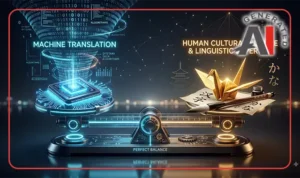 The difference between successful machine translation and disappointing results often comes down to one question: What is the content expected to achieve? Consider two localization projects.
The first involves translating thousands of software support articles into Japanese, Korean, and Simplified Chinese. The content is repetitive, terminology is already standardized, and updates are released every week. In this scenario, machine translation supported by translation memories, approved glossaries, and professional post-editing delivers excellent efficiency without compromising machine translation quality.
Now consider a medical device manufacturer preparing documentation for regulatory approval in Japan and South Korea. The manuals include operating procedures, safety warnings, and maintenance instructions that must comply with local regulations and industry terminology. Although MT could produce a first draft, relying on it alone would introduce unnecessary risk. Human linguists with medical expertise are essential to verify terminology, ensure compliance, and adapt the documentation for local professional use.
The technology has not changed. The business context has. That distinction explains why successful localization depends less on selecting the most advanced MT engine and more on selecting the right workflow for each project.
Human Expertise Strengthens Translation Quality Assurance
Machine translation has become remarkably capable, but it still cannot evaluate intent, cultural expectations, or business impact.
Native linguists remain responsible for decisions that machines cannot reliably make. They identify inconsistent terminology, improve readability, verify industry-specific language, and ensure that every translation reflects the client’s voice while meeting local expectations. This combination of technology and expert review forms the foundation of effective translation quality assurance.
Instead of replacing human translators, MT allows them to focus on the work that creates the greatest value: solving linguistic problems, protecting brand reputation, and ensuring that localized content feels natural to its audience.
That balanced approach is particularly valuable across Asia, where even closely related markets often require different communication styles. If you’d like to explore the technology behind today’s MT workflows in more detail, read our guide, How AI Translation Works: Top Tools and Techniques.
The Right Judgment Delivers Better Localization
Machine translation is one of the most valuable tools available to localization teams, but it is not a universal solution.
Knowing when to use machine translation requires more than confidence in technology. It requires understanding the content, the audience, the target market, and the consequences of getting the translation wrong.
At 1-StopAsia, every project begins with that evaluation. By combining localization technology, experienced native linguists, and proven quality methodologies, we recommend the workflow that best supports each client’s business goals rather than applying the same process to every project.
The result is faster delivery where automation adds value, greater accuracy where human expertise is essential, and localization strategies that perform successfully across Asia. For more insights, explore our previous guide on machine translation strategies to see how different MT workflows support multilingual growth.
Not sure whether machine translation is the right choice for your next localization project? Talk to the specialists at 1-StopAsia. We’ll help you choose the workflow that balances speed, cost, and quality while ensuring your content performs in every Asian market.