AI Overview
| Category | Summary |
| Topic | How product description translation drives impulse purchases and brand success in Vietnam by leveraging cultural and linguistic localization. |
| Purpose | To guide brands on how to adapt their messaging, tone, design, and communication for the Vietnamese market beyond simple translation |
| Key Insight | Vietnamese consumers prioritize cultural respect, social proof, and community-oriented messaging – missteps in tone, visuals, or language can damage trust and reduce sales. |
| Best Use Case | Global brands expanding into Vietnam or localizing content for Southeast Asian audiences |
| Risk Warning | Over-reliance on direct translation or Western-style communication can lead to public backlash or brand damage due to cultural disconnect and messaging friction. |
| Pro Tip | Collaborate with native linguists, cultural consultants, and local partners for language, tone, and visual validation to ensure product descriptions resonate instantly and drive consumer engagement. |
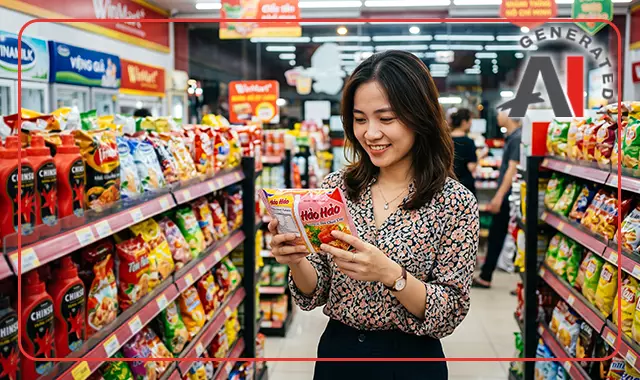
A shopper’s thumb hovers over a product photo for barely a second before deciding whether it deserves a second look. Vietnam’s retail sector has turned that fleeting moment into a real battleground, as the country’s digital economy expands at close to 20% year on year and modern trade channels, from convenience chains to e-commerce marketplaces, multiply just as fast. Brand recognition rarely wins that split second; the words on the label or product page do. For international brands entering Vietnam, that instant is where a generic, unlocalized product description quietly costs sales, while a precise, culturally attuned one wins shelf space and consumer trust.
The Vietnam Market Entry Pain Point: When Product Descriptions Fail to Localize
Many brands treat product description translation as a formality, something to finish after packaging design, pricing, and distribution are locked in. That sequencing creates a structural problem. By the time the text reaches a linguist, there is little room left to adapt tone, restructure claims, or adjust phrasing for space constraints, so the description gets translated literally instead of localized properly.
This shortcut shows up on Vietnamese shelves in predictable ways. Product benefits get listed in a flat, feature-by-feature format that reads like a spec sheet rather than something written to be picked up and read in a few seconds. Claims that work in English, built around individual achievement or personal transformation, can land as boastful rather than persuasive, since Vietnamese consumers generally respond better to messaging grounded in practicality, family, and shared benefit. Sentence structures carried over from English also tend to run long and formal on a Vietnamese label, where shoppers expect a copy that scans quickly and reads naturally out loud.
The impact on impulse buying is direct. Vietnam’s retail environment rewards products that communicate their value instantly, whether on a crowded supermarket shelf or a mobile product page scrolled past in seconds. A description that requires extra cognitive effort to parse, because the phrasing feels foreign or the claims feel abstract, loses that moment to a competitor whose copy is easier to process and more emotionally relevant.
Common Mistakes in Packaging and Label Translation for Vietnamese Shelves
Beyond tone, packaging and label translation carries its own set of pitfalls that go past language accuracy. Diacritics are one of the most underestimated risks: Vietnamese relies on tone marks that change a word’s meaning entirely, and a single missing or misplaced mark can shift a benefit claim into something confusing or, in worse cases, unintentionally negative. Regional word choice matters too. A term that reads naturally in Hanoi may sound stiff or unfamiliar in Ho Chi Minh City, and brands running national campaigns without accounting for that variation risk alienating a portion of their audience before the product is even opened.
Color and symbol choices on packaging compound the risk further. Certain colors, numbers, and imagery carry cultural associations that have nothing to do with the words on the label, and a design that photographs well in a Western market can send an entirely different signal on a Vietnamese shelf. Translation alone cannot solve any of this. It requires a team that understands both the language and the retail context the product will reach.
The Advantages of Localization: Solving the Shelf War with Precision Product Description Translation
The fix is not simply hiring a fluent Vietnamese speaker to swap out the English text. The advantages of localization come from treating product descriptions as marketing copy first and translated content second, which means working with linguists who understand consumer psychology, retail conventions, and regional dialect variation, not just grammar.
This starts with the tone of voice. A premium skincare brand and a budget household product need different registers in Vietnamese, just as they would in English, and getting that register right signals credibility before the shopper reads a single benefit claim. It continues with how copywriters frame benefits. Instead of listing features in isolation, effective Vietnamese product copy connects each feature to a tangible, everyday outcome the shopper can picture immediately, since concrete language converts better than abstract claims in this market.
Clear communication of product benefits also depends on knowing what to leave out. Vietnamese marketing copy tends to perform better when it is concise and easy to scan, so a localization process that only translates without editing for length and rhythm often produces text that is accurate but exhausting to read on a small label or a mobile screen.
Building a Transnational Strategy for Retail Localization in Vietnam
Brands that succeed in Vietnam rarely treat the market as an isolated project. They build a transnational strategy that allows product description translation to scale consistently across Vietnam and neighboring markets, while still leaving room for the specific adjustments each country requires. That means centralized terminology management paired with in-market linguists who have the authority to adapt phrasing rather than translate it word for word, so the brand voice stays recognizable while the copy still feels native to Vietnamese shoppers.
Retail localization at this level also depends on workflow discipline. Product descriptions, packaging text, and digital listings frequently originate from different internal teams, and without a shared terminology base, brands end up with inconsistent claims across channels, which undermines the trust that consistent messaging should build.
Product Localization Beyond Words: Tone, Culture, and Consumer Triggers
 Effective product localization also means recognizing which consumer triggers actually move purchase decisions in Vietnam. As detailed in 1-StopAsia’s analysis of cultural dos and don’ts for marketing in Vietnam, Vietnamese audiences respond more strongly to messaging built around community, shared enjoyment, and practicality than to language centered on individual status. A product description that leans on the wrong trigger will not necessarily be wrong in a grammatical sense, but it will fail to persuade, which on a crowded shelf is functionally the same as failing altogether.
Case Example: How Localized Messaging Changed Consumer Engagement in Vietnam
A well-known beverage brand offers a clear illustration of how much tone alone can affect performance. The brand launched a youth-oriented campaign built around a slogan that translated roughly into an invitation to stand out individually. Vietnamese audiences interpreted the message as overly self-focused, and engagement stayed flat. Once the marketing team adapted the messaging to emphasize shared celebration and group moments, supported by imagery of people enjoying the product together, engagement improved significantly, and the campaign gained visible momentum across digital channels.
The product itself never changed. What changed was the framing of the message around it, adjusted to match how Vietnamese consumers actually relate to the product category. That is the core mechanism behind localized product descriptions driving impulse purchases: the words on the shelf either match the shopper’s existing worldview or they create friction, and friction costs sales in a market where the decision window is measured in seconds.
Conclusion
Vietnam’s retail sector rewards brands that treat product description translation as a strategic function rather than a final step before launch. Generic, literally translated copy might be technically correct, but it consistently underperforms against descriptions built with Vietnamese consumer psychology, regional dialect awareness, and cultural context in mind. Winning shelf space in this market depends less on louder marketing and more on precise, locally attuned language that shoppers understand and trust instantly.
1-StopAsia works with brands entering Vietnam to combine native linguistic expertise with retail and consumer marketing knowledge, ensuring product descriptions, packaging, and digital listings all speak with one consistent, locally resonant voice. If your brand is preparing for Vietnam market entry, our team can help you build product descriptions that convert browsers into buyers from the first glance.
Ready to localize your product descriptions for Vietnam? Contact 1-StopAsia for a tailored consultation.