AI Overview
| Category | Summary |
| Topic | Fintech Localization for India |
| Purpose | To guide global fintech companies in adapting compliance, payment experiences, and language for an Indian market launch. |
| Key Insight | Successful entry depends on integrating regulatory compliance, local payment rails, and multilingual product design before launch. |
| Best Use Case | Global fintech product, compliance, and localization teams preparing to enter or expand in India. |
| Risk Warning | Ignoring data localization, consent requirements, UPI expectations, or regional language needs can undermine compliance and user trust. |
| Pro Tip | Build an approved compliance glossary, adapt payment and number formats, and test localized screens with native regional reviewers. |
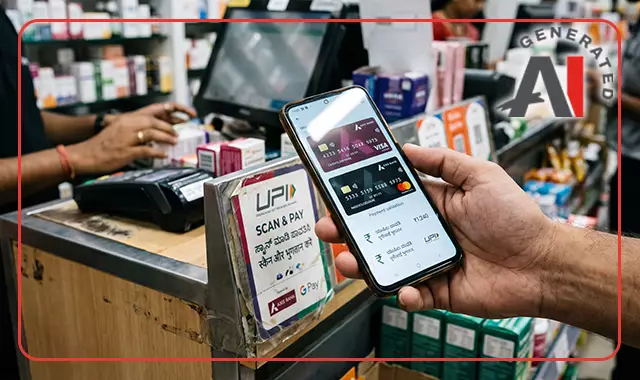
Over 80 percent of digital payments in India run on UPI. However, when Apple Pay finally launched in the country on 30 September 2026, it arrived without support for UPI or RuPay cards, starting instead with Visa and Mastercard credit cards from a single partner, Axis Bank. A company present in more than 90 countries and regions chose a deliberately narrow entry because India’s payment rails, banking partnerships and regulators leave very little room for a copy of what works elsewhere. For localization managers, compliance officers and product leads, the lesson is easy to underestimate: fintech translation for India begins long before the first screen is translated, and it covers regulation, payment methods, tone of voice and the languages people trust with their money. This article looks at where global launches break, how a localization-led method prevents it, and what the experience of Apple and Mastercard shows in practice.
Fintech in India: Three Rule Sets That Decide Whether a Launch Survives
The Indian market rewards preparation and punishes assumptions, and three rule sets explain most of the friction that global teams meet.
RBI Data Localization Comes First
In April 2018 the Reserve Bank of India instructed payment system providers to store the entire data of their payment systems only in systems located in India. Foreign processing is allowed for the foreign leg of a cross-border transaction, but the data must be deleted abroad and brought back to India within 24 hours, as the RBI clarified in its June 2019 FAQs. Misreading this proved expensive: in 2021 the RBI barred three foreign card networks, Mastercard, American Express and Diners Club, from taking on new customers over data storage compliance. Every contract, audit report and regulatory submission tied to these rules has to be understood and rendered with precision, which makes terminology a compliance matter and not a stylistic one.
The DPDP Act and Its 22-Language Notice
India’s Digital Personal Data Protection Rules were notified in November 2025, and the core operational obligations, including notice and consent, apply from May 2027, which is closer than most launch roadmaps assume. Users must be able to read the consent notice in English or in any of the 22 languages listed in the Eighth Schedule of the Constitution, so privacy copy becomes a multilingual legal deliverable that has to be accurate, plain and consistent across every touchpoint.
UPI and RuPay Shape What Users Expect
Because UPI accounts for more than 80 percent of digital payments, a checkout built around cards alone looks incomplete to many users, and a help center that explains card disputes but ignores UPI failures leaves support teams answering the same questions in several languages. Apple Pay’s launch without UPI or RuPay shows that even a strong global brand begins with partial coverage and works outward from the rails it can integrate first.
Fintech Investors in India and Local Rivals Raise the Bar
 India drew about US$2.4 billion in fintech financing in 2025, which placed it third worldwide according to Tracxn, and Peak XV Partners raised US$1.3 billion across three new funds in early 2026 with fintech among its priorities. Investors including Accel, Peak XV and Tiger Global have backed local players such as Razorpay, CRED and Groww, and those companies built their products in the vocabulary, payment habits and support style of Indian users from the start. A global entrant is therefore compared with native competitors from the first onboarding screen, and every awkward term, mistranslated warning or foreign currency format signals that the product was designed elsewhere. In financial services that signal affects trust directly, because people hand over money and identity documents only to brands that sound as if they understand the rules.
Fintech Translation Services That Go Far Beyond Words
1-StopAsia has worked in Asian-language translation and software localization since 1998, and our approach treats compliance, terminology and user experience as one workstream rather than three separate tasks. Our earlier analysis of how professional fintech translation services support regulatory compliance across Asia explains why a single mistranslated term in a license filing or customer contract can lead to penalties, legal disputes or reputational damage.
Start With a Compliance Glossary
Before any interface copy is written, we build a bilingual glossary that fixes one approved rendering for terms such as KYC, UPI ID, autopay mandate, chargeback and grievance redressal, aligned with the wording that RBI circulars and your Indian banking partner already use. A shared glossary prevents the contradictions that appear when legal, product and support teams translate the same concept in three different ways.
Localize the Experience, Not Only the Interface
Practical adaptation covers UPI integration, mobile-first onboarding, rupee amounts in the Indian digit grouping where one hundred thousand is written as 1,00,000 and counted as one lakh, and support that values speed and practical answers, which our analysis of B2B SaaS localization in Asia identified as the priority for Indian customers. Multilingual payment screens should also follow user geography, with Marathi in Maharashtra, Tamil in Tamil Nadu and Bengali in West Bengal, instead of assuming that one national language serves everyone.
Translation to Hindi Is Only the Start of Fintech Localization
Translation to Hindi is the natural first step, because Hindi is widely used across northern and central India, but it is one of 22 scheduled languages and it demands careful decisions about register. A formal term such as bhugtan for payment can read as stiff next to the English word users see on their phones, while many people mix Hindi and English in the same sentence and type Hindi words in Latin letters. Teams should therefore define a tone guide that states when to keep English terms, when to use plain Hindi and when a regulated message, such as a fee disclosure or a consent notice, must follow formal wording exactly. After launch, usage data and support tickets should guide which regional languages to add next, and native reviewers from each region should test screens before they go live.

Example of Fintech Companies in India That Adapted, and Those That Were Forced To
Real launches show how these principles behave under pressure, and three cases stand out.
Apple Pay: A Narrow Launch by Design
Apple Pay began with Axis Bank, which held 16.3 million of the 124 million credit cards in India as of August according to central bank data cited by Reuters, and only its Visa and Mastercard cards are eligible. Acceptance is limited to merchants and terminals enabled for the service, which points to a staged rollout shaped by local partners rather than a global switch, a sensible model for any fintech that wants to learn from real users before widening coverage.
Mastercard: A Compliance Lesson
The 2021 restriction on taking new customers in India showed that data localization is enforced in practice, and that technical compliance together with its documentation carries direct commercial consequences, and any global team preparing documentation for Indian banking partners should expect the same level of scrutiny.
Apple in China: The Same Pattern Elsewhere
Apple moved iCloud services for Chinese users to a local partner in Guizhou to meet data localization requirements under China’s Cybersecurity Law. The same company adapts to local rules in India and in China, and the common thread is that local rules, local partners and local language are treated as part of the product.
Fintech Translation for India Is a Launch Decision, Not a Language Task
India combines strict regulators, a payment ecosystem built around UPI, well-funded domestic competitors and users who speak many languages, so the safest launches are the ones that treat adaptation as a single plan covering compliance, product and language. 1-StopAsia brings more than 25 years of Asian-language and software localization experience to that plan and works as a reliable partner for global fintech firms that want to avoid costly rework after launch.
Key Takeaways
- India’s fintech rules, from RBI data storage to DPDP consent notices in 22 languages, require dedicated compliance work and product localization before launch.
- Linguistic and cultural adaptation, including regional languages, UPI flows and Indian number formats, builds the trust that financial services depend on.
- Partnering with experts like 1-StopAsia reduces launch risk and shortens the path to market acceptance.