
AI Overview
| Category | Summary |
| Topic | Multilingual communication management for European and Asian markets |
| Purpose | To explain how enterprises can replace literal translation with structured, market-specific multilingual communication. |
| Key Insight | Market-specific tone guidelines, cultural review, and feedback loops convert accurate translations into communication that resonates locally. |
| Best Use Case | Enterprise marketing and product teams auditing campaigns, web content, and brand messaging across European and Asian markets. |
| Risk Warning | Relying on literal translation and a single global voice can create tone mismatches, cultural errors, and quietly declining engagement. |
| Pro Tip | Build market-specific tone guidelines, require native-market review before publication, and formalize feedback from local teams. |
Every September, Europe marks a day built around a simple idea: linguistic diversity is an asset, not an obstacle. Yet inside the marketing departments and product teams of global enterprises, that idea rarely survives contact with a deadline. A tagline gets translated word for word. A campaign designed for London runs unchanged in Seoul. A product page reads perfectly in English and oddly everywhere else. European Day of Languages 2026 is a useful checkpoint for a harder question: why do companies with sophisticated global operations still stumble over something as fundamental as how they communicate across markets?
The answer has little to do with budget or intent. Most enterprises genuinely want to connect with their international audiences. What they lack is a structured way to move from translation to communication that actually resonates in each target market, especially across the linguistically dense regions of Europe and Asia.
Why the Day of Languages Still Matters for Global Business
The Day of Languages exists to remind institutions and companies that language is never neutral. A message carries assumptions about hierarchy, directness, humor, and trust that shift from one market to the next. For a company operating in France, Germany, Poland, Japan, and Vietnam simultaneously, that means five different sets of expectations about how a brand should sound.
Enterprises that treat this observance as a marketing moment, a social post here, a blog mention there, miss its practical value. The real opportunity is to use it as an annual audit point: a scheduled reason to check whether the company’s multilingual output still matches how its markets actually communicate, rather than how the source content was originally written.
The Persistent Pain Points in Multilingual Communication
Despite years of investment in translation technology, multilingual communication keeps failing in predictable ways. Three patterns show up again and again in enterprise content.
Literal Translation Errors That Undermine Multilingual Business Communication
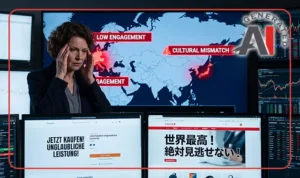 The first and most common failure is literal translation. A phrase that sounds confident in English, such as a call to action built on urgency or exaggeration, can read as pushy or untrustworthy once rendered word for word into Korean or Thai. Multilingual business communication depends on meaning being carried across, not just vocabulary. When a translator or an automated engine prioritizes lexical accuracy over communicative intent, the resulting copy technically matches the source but fails to persuade anyone.
Ignoring Tone of Voice Differences
The second pattern is tone mismatch. A German audience generally expects directness and factual framing. A Japanese audience often responds better to indirect phrasing and modest claims. A campaign built around bold, superlative language, “the best,” “the fastest,” “unmatched”, can land as arrogant in markets where humility signals credibility. 1-StopAsia has documented this exact gap in its analysis of why Western campaigns lose momentum after entering Asian markets, noting that taglines built for London or Los Angeles frequently need complete tonal reconstruction before they work in Seoul or Bangkok. Readers can review that breakdown in The Localization Gap: Why Western Campaigns Lose Momentum in Asia for a market-by-market look at where these mismatches originate.
Cultural Blind Spots That Compound Over Time
The third pattern is cumulative rather than immediate. A single mistranslated phrase is embarrassing but fixable. A pattern of ignoring cultural context across dozens of markets erodes trust more slowly and is harder to trace back to a root cause. Industry research on consumer language preference consistently shows that buyers gravitate toward brands that communicate in their own language and idiom, and enterprises that skip this step in European and Asian markets alike tend to see slower adoption, not outright rejection, which makes the problem easy to underestimate.
Building a Pragmatic Multilingual Management Strategy
Fixing these patterns is not primarily a translation problem. It is a multilingual management problem, meaning it requires structure, ownership, and a repeatable process rather than a single better vendor.
A pragmatic approach starts with three commitments. First, tone of voice guidelines need a market-specific layer, not just a single global brand voice document. Second, cultural review has to happen before publication, not after a market complains. Third, feedback loops from local teams and native reviewers need a formal path back into the source content strategy, so lessons from one campaign inform the next instead of being lost after launch.
Cultural Semantics and Local Adaptation
Cultural semantics, the layer of meaning that sits underneath literal word choice, is where most enterprise content breaks down. A color, a number, or an image that is neutral in one market can carry unintended weight in another. Adapting semantics rather than just syntax requires linguists who understand both the source intent and the target market’s lived context, which is why native-market review remains essential even as machine translation tools improve.
A Case in Point: Turning Communication Failures Into Market Wins
A global e-commerce retailer expanding across Vietnam and South Korea offers a concrete illustration of how this plays out in practice. The company had been running product descriptions and promotional campaigns through a standard translation workflow, prioritizing speed over market fit. Engagement on localized pages lagged well behind the English-language originals, and the internal team could not pinpoint why the copy was technically accurate but commercially flat.
Working through a structured localization process, the team paired neural machine translation for high-volume product descriptions with human post-editors who reviewed every output against local tone expectations. For headline copy and promotional messaging, transcreation specialists rewrote key lines rather than translating them, adapting the persuasion strategy itself rather than just the words. Automated terminology checks flagged inconsistencies before publication, catching mismatches that would otherwise have shipped to customers. The shift moved the company from a translation mindset to a communication mindset, treating each market’s copy as something written for that audience rather than converted for it.
Marking This Linguistic Day With Action, Not Just Awareness
European Day of Languages, and any linguistic day observance a company chooses to mark, works best as a trigger for action rather than a symbolic gesture. Enterprises operating across Europe and Asia have a concrete opportunity each year to audit their multilingual content against the markets it is meant to serve, not against how well it was translated from the source.
That audit does not need to be exhaustive to be useful. Reviewing flagship campaigns, top-performing web pages, and core brand messaging against local tone and cultural expectations in even three or four key markets will surface the patterns described above faster than most companies expect.
Conclusion
The persistence of these errors- literal translation, tone mismatch, and unexamined cultural assumptions is not a sign that multilingual communication is unusually difficult. It is a sign that most enterprises still treat it as a downstream task rather than a core part of how they operate internationally. Companies that build multilingual management into their process, with market-specific tone guidelines, pre-publication cultural review, and structured feedback loops, consistently avoid the credibility gaps that quieter competitors keep repeating.
1-StopAsia works with global enterprises to close exactly this gap, combining linguistic expertise across Asian and European markets with a pragmatic, audit-first approach to multilingual content.
Key Takeaways
- Multilingual communication goes well beyond translation. It requires tonal and cultural adaptation specific to each market, not a single global voice applied everywhere.
- Ignoring linguistic diversity, even around observances like European Day of Languages, carries real business risk in the form of quietly declining engagement rather than obvious failure.
- 1-StopAsia’s approach bridges these gaps by pairing native-market linguists with a structured, repeatable process for tone, terminology, and cultural review.
Ahead of European Day of Languages 2026, enterprises operating across Europe and Asia have a clear window to review how their content actually lands in each market. Contact 1-StopAsia to discuss a tailored multilingual communication audit before the next campaign ships.