AI Overview
| Category | Summary |
| Topic | Challenges and strategies for medical device localization to meet Asian regulatory and cultural standards |
| Purpose | To inform medical device companies about the importance of specialized localization—beyond literal translation—for regulatory approval and market trust in high-growth Asian markets |
| Key Insight | Accurate linguistic translation alone is insufficient; regulatory-specific terminology, culturally adapted messaging, and consistent documentation across all materials are essential for smooth device approval and clinician/patient trust. |
| Best Use Case | Medical device manufacturers planning to enter or expand in Asian markets like Japan, China, and South Korea, especially when launching multiple languages and needing regulatory compliance and brand trust simultaneously. |
| Risk Warning | Relying on generic translation or late-stage localization often results in regulatory rejections, costly delays, or inconsistent patient materials that undermine trust and market success. |
| Pro Tip | Engage linguists with medical and regulatory expertise early in the project; implement rigorous terminology validation, subject-matter expert reviews, and consistent cross-document checks to meet local regulatory expectations and cultural norms. |
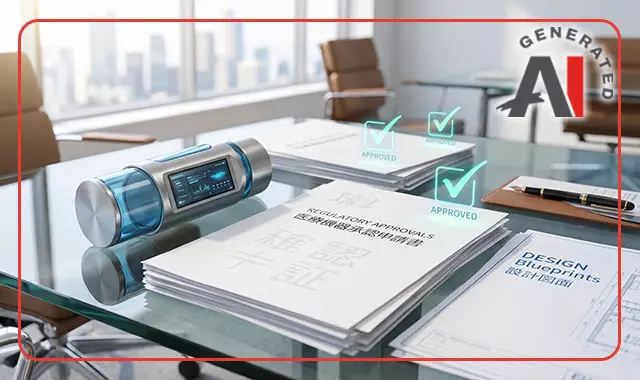
What happens when a groundbreaking medical device clears every engineering test, passes every clinical trial, and still fails to gain approval in a new market? Ask the regulatory affairs teams who have watched submissions bounce back from Japan’s PMDA or China’s NMPA over a single ambiguous term, and the answer becomes obvious. The device didn’t fail. The language around it did.
For medical device companies expanding into Asia, device localization determines whether years of research and development translate into patient access, or sit stuck in review while competitors move ahead. Engineering innovation gets a company through clinical trials. Language precision gets it through the door of a foreign regulatory system, and then into the hands of the clinicians and patients who use the product.
This distinction rarely gets enough attention in expansion planning. Teams budget carefully for regulatory consulting, clinical validation, and market research, then treat translation as a line item to handle near the end of the process. That sequencing creates the very delays and rejections companies are trying to avoid, and it’s a pattern we see repeatedly across medical device projects moving into Japan, China, South Korea, and other high-growth Asian markets.
The Real Pain Point Behind Device Translation
Device translation sounds straightforward until a company actually tries to launch a product across several Asian markets at once. The pain point isn’t a shortage of bilingual professionals. It’s the assumption that device translation is a linguistic task rather than a regulatory and clinical one.
Regulatory Language Barriers Across Japan, China, and South Korea
Each market runs on its own regulatory vocabulary, and that vocabulary carries legal weight. Japan’s Pharmaceuticals and Medical Devices Agency expects standardized terminology and formatting that differs meaningfully from the conventions used in Western submissions. China’s National Medical Products Administration requires documentation aligned with locally approved nomenclature, and a device name or ingredient reference that hasn’t gone through the correct registration channel can stall an entire filing. South Korea’s Ministry of Food and Drug Safety applies its own layer of scrutiny to labeling and instructions for use, often flagging inconsistencies that a general translator wouldn’t recognize as problems at all.
A translator without domain grounding might render a term correctly by dictionary standards and still miss the regulatory equivalent the reviewing agency expects. That gap between technically accurate and regulatorily accepted is where most delays originate, and it rarely gets caught until a reviewer flags it, at which point the company loses weeks resubmitting documentation it thought was finished.
This is also where experience across multiple submissions pays off. A linguist who has worked through several PMDA or NMPA cycles recognizes the phrasing patterns regulators expect before a document ever reaches formal review, rather than learning those patterns through rejected submissions.
Cultural Barriers That Generic Translation Misses
Beyond regulation, cultural expectations shape how clinicians and patients interpret instructions. A warning that reads as appropriately direct in English can come across as alarmist, or in the opposite direction, too soft to register as a genuine safety concern once translated without adaptation. Formatting conventions, unit preferences, and even the visual layout of a device manual carry different expectations from one market to the next. None of this shows up in a standard word-for-word translation, and none of it gets caught by machine translation running without expert review.
Building an International Market Entry Strategy for Medical Devices
Solving these pain points requires treating localization as part of the international market entry strategy from day one, not as a post-approval formality. A tailored approach brings together linguists with medical and scientific training, regulatory awareness specific to each target market, and a review process that catches terminology issues before they reach a regulator’s desk.
This is where international market entry strategies for medical devices diverge sharply from general product localization. A consumer electronics brand can tolerate a slightly awkward phrase in a user manual. A medical device company cannot, because the same manual doubles as a regulatory document and a patient safety tool.
In practice, this means the localization workflow needs checkpoints that general translation projects skip entirely: terminology validation against approved glossaries, a subject matter expert review layer, and cross-checks between every document type tied to a single product, from labeling to training materials to the IFU itself. Skipping any one of these checkpoints to save time tends to cost far more time later, once a regulator sends the submission back.
Why IFU Translation Requires Domain Expertise
Instructions for Use sit at the center of this challenge. IFU translation isn’t a matter of converting sentences from one language to another. It requires linguists who understand dosing conventions, contraindication language, and the specific phrasing regulators expect to see repeated consistently across every document tied to a submission. An inconsistency between the IFU and the labeling, even a minor one, can trigger a request for clarification that adds weeks to a review timeline. Our recent look at MDR-aligned localization covers this challenge in more depth, including how terminology consistency and document traceability now sit at the center of compliant documentation across the EU device lifecycle. The same discipline applies directly to Asian regulatory frameworks.
A Brand Localization Strategy That Protects Trust
 Regulatory compliance gets a device approved. A coherent brand localization strategy is what gets it trusted. Patients and clinicians form an impression of a company’s reliability from the clarity of its materials long before they experience the product itself. When packaging, training content, and digital materials carry the same tone and terminology across markets, that consistency signals a company that understands where it’s operating rather than one that copy-pasted its way into a new region.
Case Example: Scaling Medical Localization Without Losing Precision
A useful illustration comes from a Fortune 500 medical device manufacturer that worked with 1-StopAsia to expand into more than 60 global markets. The company needed to launch across 20-plus languages simultaneously, often with less than two weeks between final content approval and go-live, while meeting compliance requirements from the FDA, EMA, and China’s CFDA.
The project brought together in-country linguists with medical and scientific backgrounds, a three-step quality assurance process involving subject matter expert review, and centralized terminology management through shared translation memory and client-approved glossaries. Multimedia assets, including training videos and safety diagrams, went through the same rigor as the written documentation.
The results were measurable. Internal compliance review time dropped by close to half, thanks to cleaner drafts and consistent terminology across markets. Clinical trial materials passed local checks without the delays or rejections the company had previously experienced, and parallel launches across 20-plus countries became a repeatable process rather than a high-risk exception. The case shows what happens when localization gets built into the launch plan rather than bolted on at the end.
The lesson generalizes well beyond one Fortune 500 manufacturer. Companies of a much smaller scale face the same underlying pressure: multiple markets, tight timelines, and zero tolerance for ambiguity in patient-facing content. The size of the launch changes, but the discipline required to get the language right does not.
Localization as the Bridge Between Innovation and Market Expansion
Medical device innovation and market expansion depend on each other, and language is the connective tissue between them. A device engineered to save lives only delivers on that promise once it clears the regulatory, cultural, and linguistic expectations of the market it enters. Device localization isn’t an obstacle standing between a company and its expansion goals. It’s the mechanism that gets the company through them.
None of this requires a radical change in how a company approaches expansion. It requires treating language as a strategic function with the same rigor applied to engineering and clinical development, and working with a partner who understands how Asian regulatory systems actually read a submission, not just how to move text from one language into another.
Work With Language Specialists Who Understand Medical Device Markets
Ready to bring your device into Asian markets without the delays that come from mismatched terminology? Contact 1-StopAsia for a consultation on your localization needs.