AI Overview
| Category | Summary |
| Topic | Localization and translation pitfalls in EV technical manuals in Thailand |
| Purpose | To raise awareness of the critical need for culturally and technically adapted EV maintenance documentation tailored to Thai technicians’ workflows, safety culture, and language nuances |
| Key Insight | Direct translation from Western manuals fails due to mismatched cultural assumptions about communication, evolving and inconsistent terminology, and structural presentation differences; effective localization must include glossary governance, tone/register adjustment, and procedural layout suited to Thai technicians. |
| Best Use Case | EV manufacturers, localization teams, and technical documentation providers working to produce safe, clear, and confidence-inspiring manuals for Thai automotive service professionals |
| Risk Warning | Using untranslated or poorly localized Western technical manuals can cause misinterpretation, procedural errors, risk of injury, workflow inefficiencies, compliance delays, and increased operational costs |
| Pro Tip | Employ native Thai linguists with automotive engineering expertise, establish a centralized Thai EV terminology glossary aligned with local standards, and incorporate structural and register adaptations as core aspects of localization rather than optional steps |
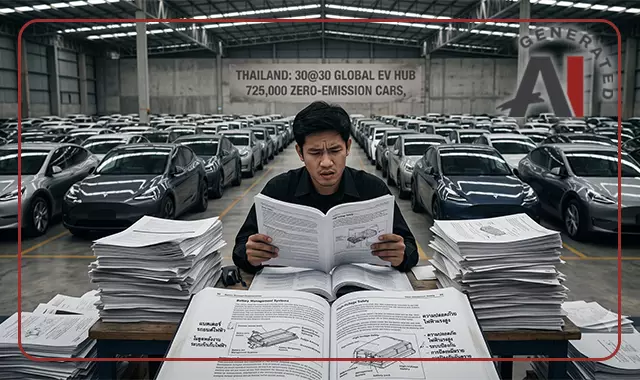
Thailand is already an established EV manufacturing hub. Under the government’s “30@30” policy, the country aims to produce 725,000 zero-emission cars and 675,000 electric motorcycles annually by 2030. Major manufacturers including BYD, BMW, Hyundai, Changan, and Great Wall Motor have expanded production in the Eastern Economic Corridor, creating a fast-growing EV ecosystem.
Documentation has not kept pace. Many workshops rely on EV technical manuals written for Western audiences and translated without adapting to Thai language, culture, or workflow. This creates unnecessary risk for technicians maintaining increasingly complex vehicles.
The Real Cost of Using the Wrong Technical Manual Translation Services
Why the Thai Automotive Sector Faces a Unique Localization Challenge
The problem is not that Thai technicians lack competence. It is that the documents they are working from were never built for them.
Western EV technical manuals carry a set of assumptions about the reader that most authors never make explicit. They assume a technician trained in a Western vocational system, comfortable with direct imperative language, and working in an environment where raising a question or flagging a procedural ambiguity is standard practice. In Thai professional culture, those assumptions do not hold. Hierarchy and deference to seniority are deeply embedded in workplace dynamics, which means a technician who encounters a confusing instruction is far more likely to interpret and proceed than to stop and ask for clarification. When the source document is imprecise, that dynamic produces risk.
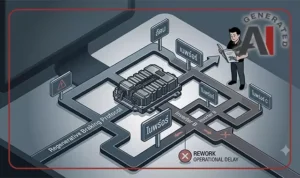
The terminology problem adds another layer. Battery management systems, regenerative braking protocols, and high-voltage safety procedures are recent enough in English that standardized vocabulary is still evolving. In Thai, the situation is more fragmented. Different manufacturers, training institutions, and regulatory bodies use different Thai terms for the same EV components. A technician working across multiple manuals from different sources may encounter three different Thai phrases referring to the same part of the same system. That inconsistency is not a minor inconvenience in a workshop servicing high-voltage battery packs.
- Tonal language structure means a single word mispronounced or mistranslated can shift meaning significantly.
- Thai uses no word spacing, which creates ambiguity in compound technical terms that does not exist in the source English.
- The formal register system in Thai requires careful calibration for professional instructional content.
Beyond English to Thai Translation: What EV Documentation Actually Requires
How English to Thai Translation Service Falls Short Without Domain Expertise
A technically accurate translation and a usable localized document are not the same thing. This distinction matters most in contexts where procedural clarity directly affects safety, and EV maintenance is precisely that context.
Standard English to Thai translation converts meaning from one language to another. Localization rebuilds the document for a different reader. For EV technical manuals targeting Thai technicians, that rebuilding involves three distinct layers of work that translation alone does not address.
The first is terminology governance. Effective localization of EV content for Thailand requires a centralized Thai glossary for drivetrain components, battery systems, and safety protocols, built specifically to align with the vocabulary that Thai automotive training institutions and the Department of Land Transport actually use. A glossary built from first principles by a generalist translator, without reference to what Thai technicians already know, produces a document that is technically accurate but practically unfamiliar.
The second is register and tone adaptation. Thai has multiple formal registers, and the appropriate level for technical service documentation sits differently in Thai than the neutral-authoritative tone of English manuals. Instructions that read as clear and professional in English can lose authority or read as inappropriate in Thai if register calibration is not part of the localization process.
The third is structural adaptation. Thai readers engage with procedural content differently. Linear numbered sequences that work as the primary instructional format in English-language manuals often benefit from additional contextual framing, visual cues, and summary checkpoints when adapted for Thai professional audiences. A document that has been translated but not structurally adapted will technically contain the correct information while still failing to communicate it effectively.
Thai Technical Translation in Practice: A Regional Automotive Case Study
What Thai Document Translation Gets Wrong in High-Stakes Technical Content
The consequences of inadequate localization in automotive documentation are not theoretical. A global automotive manufacturer operating across Thailand, Japan, and China encountered persistent problems with misaligned technical documents across its facilities. Service technicians were working from translated manuals that used inconsistent terminology across models and markets, carried over structural assumptions from the English source content, and had not been reviewed by anyone with hands-on knowledge of the relevant systems. The result included rework cycles, compliance approval delays, and in-market reviewers flagging errors that had passed through multiple review stages undetected.
Instead of re-translating content, the manufacturer rebuilt its localization workflow with centralized glossaries, engineering-trained linguists, and consistent terminology across Asian markets. The result was faster compliance, fewer in-market corrections, and higher technician confidence because terminology matched Thai training materials.
This is precisely the kind of outcome that separates Thai technical translation built on domain expertise from translation built on linguistic equivalence alone.
Thai Document Translation Service That Works in the Field
Thailand’s EV programme is backed by serious industrial investment and government policy with teeth. The manufacturers are here. The factories are operating. The service infrastructure is expanding to support a growing fleet of vehicles that Thai technicians have not maintained before at this scale.
The documentation supporting that infrastructure needs to match the ambition of the programme it serves. Western technical manuals that have been translated but not localized carry cultural, linguistic, and structural gaps that create real operational risk for the technicians using them and liability exposure for the manufacturers producing them.
Addressing this requires a Thai document translation service built on three foundations: native linguists with automotive domain knowledge, centralized terminology governance aligned to Thai industry standards, and a localization methodology that treats structural and register adaptation as core deliverables rather than optional refinements.
1-StopAsia has been delivering technical localization for the automotive and EV sector across Asian markets for over 25 years. The combination of native Thai expertise and engineering-domain knowledge positions 1-StopAsia to support manufacturers, localization managers, and technical documentation teams who need service documentation that performs reliably in the field, not just documentation that translates correctly on paper.
Ready to make your EV documentation work in Thailand? Talk to the 1-StopAsia team about technical localization that reduces risk, improves technician confidence, and keeps documentation aligned with production. For more insights, explore our Automotive Localization resources.