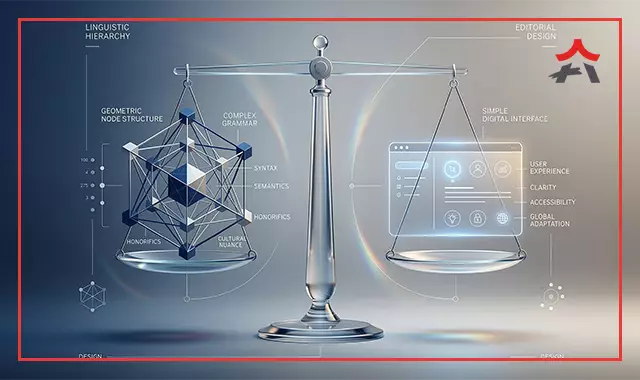
AI Overview
| Category: | Summary |
| Topic | How Asian formality systems influence UX writing, compliance communication, and localization strategy in Japanese, Korean, and Thai |
| Purpose | To help organizations understand how linguistic hierarchy in Japanese, Korean, and Thai affects communication clarity, authority perception, and user trust when designing multilingual interfaces, compliance documentation, and public messaging. |
| Key Insight | In Japanese, Korean, and Thai, formality is embedded in grammar and vocabulary rather than just tone. Using the wrong honorifics, speech level, or politeness marker can make instructions appear disrespectful, overly rigid, or culturally inappropriate, reducing usability and credibility. |
| Best Use Case | UX writers, localization managers, compliance teams, and public‑sector communicators designing multilingual content for Japanese, Korean, and Thai audiences. |
| Risk Warning | Direct translation from English without adapting formality levels can lead to confusing instructions, culturally inappropriate tone, or reduced authority in regulatory and institutional communication. |
| Pro Tip | Work with native linguists and localization specialists who understand Japanese honorifics, Korean speech levels, and Thai politeness markers to ensure communication reflects appropriate hierarchy, clarity, and cultural expectations. |
In many Western languages, tone and politeness can be adjusted through word choice or sentence structure. In several Asian languages, however, formality is not simply a stylistic preference, it is embedded in the grammar and vocabulary itself. The way a message is delivered can directly affect how it is interpreted, how authority is perceived, and whether instructions are taken seriously.
For organizations operating across Asian markets, this linguistic reality has practical implications. Regulatory instructions, public announcements, and digital interfaces must all reflect appropriate tone and hierarchy. When communication does not match cultural expectations, the message may appear confusing, overly casual, or lacking authority.
These dynamics are part of what linguists and localization professionals refer to as Asian formality systems: language structures that encode respect, social position, and situational context. Understanding how these systems function is essential for UX writers, compliance specialists, localization managers, and public communication teams.
Japanese, Korean, and Thai each demonstrate distinct approaches to linguistic hierarchy. By examining their structures, organizations can better adapt their communication strategies for clarity, usability, and regulatory alignment.
Formality as a Communication System
In many languages, politeness is conveyed through tone or word choice. In contrast, Asian languages often incorporate formality directly into grammatical structures. These Asian formality systems function as communication frameworks that guide how speakers and writers present information based on social context. They influence verb forms, sentence endings, pronouns, and even vocabulary.
Because of this, the same message can carry different meanings depending on the formality level used. A statement that sounds neutral in English might appear disrespectful or overly rigid when translated without cultural adaptation.
For organizations producing multilingual content, this affects several areas:
- UX writing and interface messaging
- Compliance documentation
- Customer support communication
- Government and public-sector messaging
Understanding how formality shapes interpretation helps teams ensure that instructions remain clear and culturally appropriate.
Japanese: Honorifics and Role Hierarchy
Japanese communication relies heavily on structured honorific language known as keigo. These expressions signal respect, humility, and hierarchy in both spoken and written communication. The system follows a set of conventions often described as Japanese honorifics rules, which guide how language changes depending on the social roles of the speaker, the subject of the sentence, and the audience.
Role-Sensitive Expressions
Japanese honorific language typically includes three main categories:
- Sonkeigo (respectful language) used when referring to someone of higher status
- Kenjōgo (humble language) used when referring to oneself in relation to others
- Teineigo (polite language) used in general formal communication
These structures influence how verbs, nouns, and expressions are used in different contexts. For example, actions performed by customers, clients, or superiors often require respectful forms, while company actions may be expressed in humble language to show deference.
Social Hierarchy and Politeness Patterns
Japanese professional and institutional communication places strong emphasis on role hierarchy. Titles, honorific suffixes, and formal vocabulary reinforce relationships between speakers. UX writers localizing content for Japan must therefore understand Japanese honorifics rules to maintain both clarity and professionalism.
Messages that are too casual may appear disrespectful, while excessive honorific complexity can reduce readability in digital interfaces. The most effective communication balances respectful tone with concise instructions.
Korean: Speech Levels and Social Distance
Korean communication relies on a different mechanism for signaling hierarchy: structured speech levels. These levels change verb endings and sentence structures depending on the relationship between the speaker and the listener.
Known collectively as Korean speech levels, these linguistic forms indicate politeness, authority, and social distance.
Politeness Markers
Korean historically includes several speech levels, though modern communication typically focuses on a few commonly used forms.
Examples include:
- Formal deferential speech used in official announcements and institutional communication
- Polite speech commonly used in professional and customer-service contexts
- Casual speech used among peers or close acquaintances
The differences between these levels are expressed through verb endings and grammatical markers.
Contextual Meaning Shifts
Because speech levels carry strong social meaning, using the wrong form can significantly change how a message is perceived. For instance: an overly casual system message in an application may feel inappropriate or unprofessional. On the other side, extremely formal phrasing in a consumer app may feel distant or unnecessarily rigid. Understanding Korean speech levels is therefore essential when designing user-facing content.
UX writers and localization teams must consider factors such as:
- The target audience
- The authority level of the message
- Cultural expectations around politeness in service communication
When the correct speech level is used, instructions feel natural and credible.
Thai: Politeness Particles and Hierarchy
Thai communication incorporates hierarchy through a combination of polite particles, contextual language choices, and social titles. While verb forms remain relatively stable, tone is shaped by subtle markers that reflect status and respect. These structures form part of the Thai linguistic hierarchy, which guides how speakers address different audiences.
Gendered Particles
One distinctive feature of Thai politeness is the use of sentence-ending particles that soften statements and signal respect.
Two of the most common are:
- “ครับ” (khráp) typically used by male speakers in polite contexts
- “ค่ะ” (khâ) typically used by female speakers in polite contexts
These particles are widely used in everyday communication and can appear in customer-facing written content to maintain a courteous tone.
Role- and Status-Based Language
Thai also reflects hierarchy through pronoun selection, titles, and contextual wording. Different pronouns may be used depending on whether the audience is a customer, a colleague, or a government official.
For public communication and institutional messaging, language often emphasizes clarity while maintaining respectful tone markers.
Localization teams working with Thai content must carefully balance politeness and usability. Excessive formality can feel stiff, while removing polite markers entirely may appear abrupt or impolite.
Implications for UX, Compliance, and Public Communication
Recognizing the role of Asian formality systems is essential for organizations that communicate across multiple Asian markets. These systems influence how audiences interpret authority, politeness, and intent.
User Comprehension
User interfaces rely on clarity and ease of understanding. However, clarity also depends on cultural alignment. In Japanese, Korean, and Thai interfaces, the appropriate level of formality helps users feel comfortable interacting with a product. Correct tone reinforces professionalism and usability.
Examples of UX elements affected by formality include:
- Error messages
- Account confirmations
- Payment notifications
- Customer support prompts
Applying the correct linguistic hierarchy ensures that instructions feel respectful and intuitive.
Regulatory Clarity
Compliance communication often requires authoritative language. Regulatory instructions, safety notices, and policy guidance must signal credibility and institutional responsibility. In this context, formality becomes part of regulatory accuracy.
When formality is aligned with cultural expectations, instructions are more likely to be taken seriously and followed correctly.
Trust and Authority in Public Messaging
Public-sector communication relies heavily on credibility. Whether delivering safety guidance, policy updates, or emergency information, tone plays a critical role in how messages are received.
Appropriate use of Asian formality systems can help:
- Reinforce institutional authority
- Improve message clarity
- Increase public trust
- Encourage compliance with guidance
Inconsistent tone, on the other hand, may signal cultural misunderstanding or reduce the perceived legitimacy of the message. For global organizations and government agencies alike, understanding linguistic hierarchy is therefore a strategic communication priority.
Conclusion
Formality in Japanese, Korean, and Thai is not simply a matter of politeness, it is a structured system that shapes how messages convey authority, respect, and social relationships. These Asian formality systems influence how audiences interpret instructions, respond to regulatory guidance, and interact with digital products. Understanding Japanese honorifics rules, Korean speech levels, and the Thai linguistic hierarchy allows organizations to design communication that is both culturally appropriate and operationally effective.
For UX teams, correct formality improves usability and user trust. For compliance teams, it strengthens regulatory clarity. For public communicators, it ensures that messages carry the authority necessary for audiences to respond appropriately.
As organizations expand into Asian markets, incorporating linguistic hierarchy into multilingual workflows is becoming essential. Teams that recognize the importance of formality can create communication that resonates with local audiences while maintaining clarity, trust, and compliance.
Explore methods that help teams apply culturally appropriate formality levels when designing multilingual communication for Asian markets. Check out our service scope: https://www.1stopasia.com/translation-services